


Streetwear started as a statement from skaters and hip hop youth but it did not stay in alleyways or basement parties for long. Now this style rakes in billions each year worldwide and some Supreme drops sell out in less than a minute. That sounds exclusive and edgy but most people miss the biggest difference between streetwear and urban fashion. The rivalry is not about clothes at all, it is a battle of culture and identity that completely flips typical fashion rules.
Table of Contents
- Defining Streetwear: Origins And Key Characteristics
- Understanding Urban Fashion: Culture And Influence
- Key Differences Between Streetwear And Urban Fashion
- The Role Of Brand And Community In Both Styles
- How Trends Evolve In Streetwear And Urban Fashion
Quick Summary
| Takeaway | Explanation |
|---|---|
| Streetwear is rooted in subcultures. | Streetwear emerged from skateboarding, hip hop, and punk scenes, focusing on individuality and rebellion. |
| Urban fashion communicates cultural narratives. | It serves as a medium for expressing community experiences and social commentary, transcending mere clothing. |
| Limited edition drops create exclusivity. | Brands use scarcity to enhance value, turning certain items into collectibles that resonate with consumers. |
| Trend evolution is community-driven. | Unlike traditional fashion, trends in streetwear and urban fashion arise from grassroots movements and social interactions. |
| Brands amplify community voices. | Successful brands in these styles listen and collaborate with their communities, shaping cultural movements rather than dictating trends. |
Defining Streetwear: Origins and Key Characteristics
Streetwear emerged as a revolutionary fashion movement that transcended traditional clothing boundaries, rooting itself deeply in urban youth culture, hip hop, skateboarding, and underground artistic expressions. According to The Conversation, streetwear represents more than just clothing — it’s a cultural narrative embodying rebellion, individuality, and self-expression.
Cultural Roots and Philosophical Foundations
The origins of streetwear can be traced back to several key subcultures in the late 1970s and 1980s. These movements were not just about clothing but about creating a visual language of resistance and identity. Key influences included:
- Skateboarding communities in California
- Hip hop culture in New York City
- Punk rock underground scenes
- Graffiti and street art movements
These environments cultivated a DIY aesthetic that prioritized comfort, functionality, and personal statement over traditional fashion norms. Brands like Supreme, Stussy, and A Bathing Ape emerged from these grassroots beginnings, transforming underground style into a global phenomenon.
Defining Characteristics of Authentic Streetwear
Streetwear distinguishes itself through several critical elements that set it apart from conventional fashion:
- Limited Edition Drops: Creating artificial scarcity and collector’s value
- Collaborative Design: Mixing unexpected brands and artistic perspectives
- Graphic Storytelling: Using clothing as a canvas for cultural commentary
- Comfort-Driven Aesthetics: Prioritizing relaxed fits and high-quality materials
For those curious about diving deeper into the visual language of streetwear, our comprehensive guide on streetwear aesthetics offers an immersive exploration of its defining visual elements.
What truly separates streetwear from traditional fashion is its rejection of top-down design hierarchies. Instead of following seasonal runway trends, streetwear creates its own momentum through community engagement, limited releases, and a constant dialogue between creators and consumers. This democratic approach to fashion has transformed streetwear from a niche subculture into a global phenomenon that continues to reshape how we think about personal style and cultural expression.
Understanding Urban Fashion: Culture and Influence
Urban fashion represents a dynamic and complex cultural expression that extends far beyond clothing, serving as a powerful medium for social communication and identity construction. According to The Conversation, urban fashion functions as a nuanced language of personal and collective storytelling, deeply rooted in societal experiences and cultural narratives.
Sociocultural Foundations of Urban Style
Urban fashion emerges from the intersectional experiences of communities navigating complex social landscapes. Unlike mainstream fashion, urban style is characterized by its organic development within specific cultural contexts. Its key distinguishing features include:
- Representation of marginalized community experiences
- Resistance to dominant cultural narratives
- Celebration of individual and collective identity
- Adaptive and responsive design approaches
These styles often originate in dense metropolitan environments where diverse cultural interactions create unique aesthetic expressions. Communities transform clothing into a form of visual rhetoric, communicating social status, cultural pride, and personal philosophies.
Elements of Urban Fashion Expression
Urban fashion encompasses multiple dimensions beyond mere clothing selection. It represents a sophisticated form of non verbal communication that integrates:
- Cultural Signifiers: Clothing as symbolic representation
- Economic Narrative: Reflecting socioeconomic realities
- Generational Dialogue: Communicating intergenerational experiences
- Artistic Innovation: Constantly reimagining personal style
For fashion enthusiasts seeking deeper insights into style development, explore our guide on streetwear inspiration to understand the creative processes behind urban aesthetic creation.
Ultimately, urban fashion transcends traditional fashion boundaries by serving as a living, breathing cultural text. It continually evolves, reflecting the dynamic experiences of communities and individuals navigating complex social landscapes. This perpetual transformation makes urban fashion not just a style choice, but a profound method of cultural expression and social commentary.
Key Differences Between Streetwear and Urban Fashion
While streetwear and urban fashion are often used interchangeably, they represent distinct aesthetic and cultural approaches to personal style. According to Research Gate, these styles emerge from complex social narratives, each with unique characteristics that set them apart.
Philosophical and Cultural Origins
Streetwear and urban fashion, while interconnected, stem from different cultural foundations. Streetwear originated primarily from skateboarding, hip hop, and youth subcultures, emphasizing a rebellious DIY aesthetic. Urban fashion, conversely, represents a broader cultural expression that encompasses community experiences and social narratives.
Key distinguishing factors include:
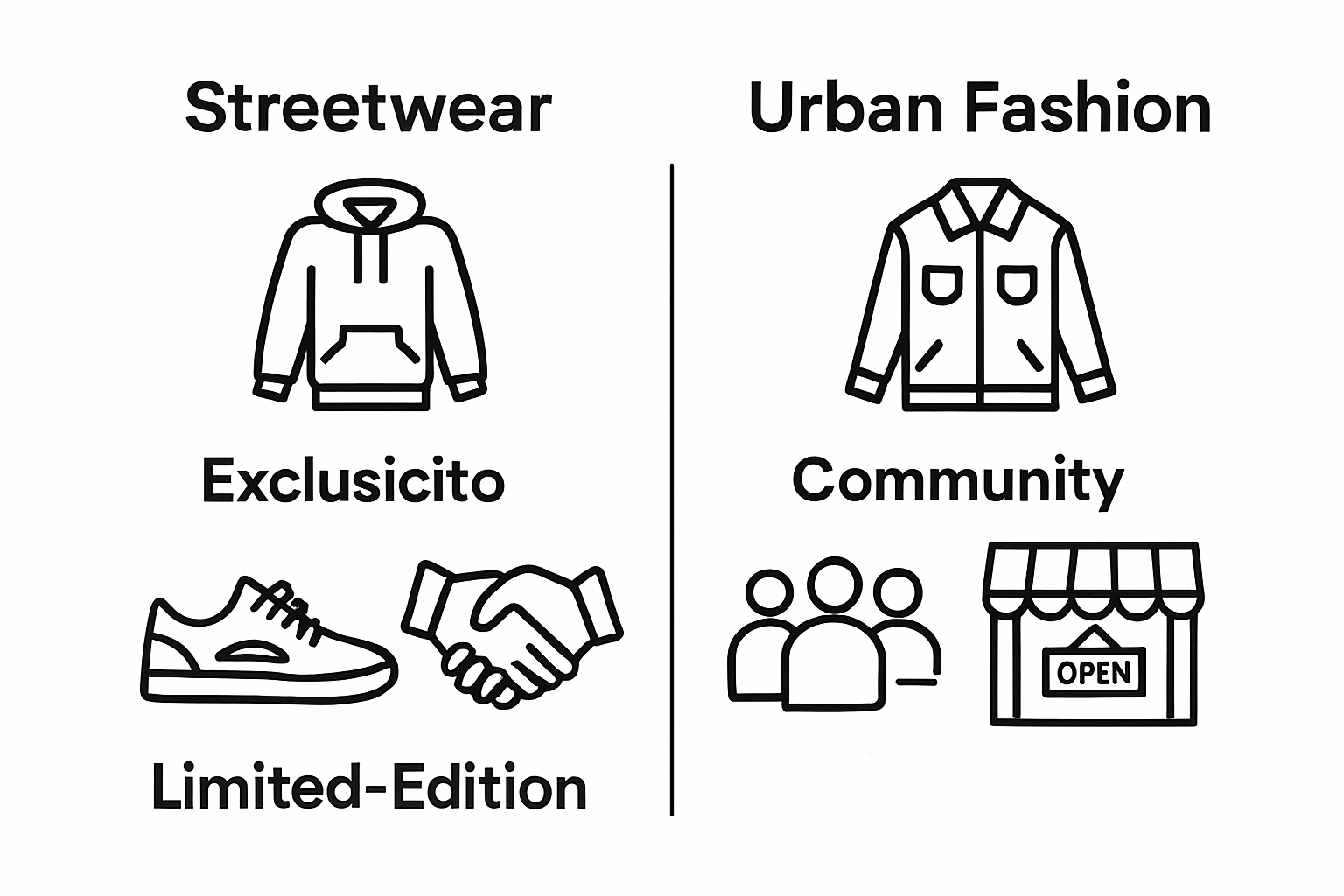
- Streetwear focuses on specific subcultural movements
- Urban fashion reflects wider societal experiences
- Streetwear prioritizes limited edition and collector appeal
- Urban fashion emphasizes adaptable, representative styling
Design Philosophy and Aesthetic Approach
The design approaches of streetwear and urban fashion reveal fundamental differences in their creative processes. Streetwear is characterized by:
- Exclusivity: Limited production runs
- Graphic Storytelling: Bold visual narratives
- Collaborative Design: Cross brand partnerships
- Performance Functionality: Technical materials
Urban fashion, in contrast, prioritizes:
- Cultural representation
- Adaptive design
- Broader accessibility
- Socioeconomic narrative expression
For enthusiasts seeking deeper insights into contemporary streetwear trends, explore our curated streetwear clothing guide to understand the nuanced landscape of modern style.
Ultimately, while streetwear and urban fashion share overlapping influences, they represent distinct modes of cultural expression.
To help clarify the distinct focus and design approaches within streetwear and urban fashion, the following table compares their core characteristics and philosophies.
| Aspect | Streetwear | Urban Fashion |
|---|---|---|
| Cultural Origins | Skateboarding, hip hop, punk, graffiti subcultures | Broader community experiences and social narratives |
| Design Philosophy | DIY, rebellious, collector-driven, collaborative | Adaptive, accessible, representative |
| Aesthetic Approach | Graphic storytelling, exclusivity, limited edition | Cultural signifiers, economic and generational focus |
| Community Role | Grassroots trendsetting, constant dialogue with brand | Collective identity, visual rhetoric |
| Typical Brand Strategies | Limited runs, collaborations, underground credibility | Inclusive styling, social commentary, empowerment |
| Streetwear functions as a specific aesthetic movement, while urban fashion serves as a broader canvas for community storytelling and identity representation. |
The Role of Brand and Community in Both Styles
Brands and communities function as critical architects in shaping streetwear and urban fashion, transforming clothing from mere fabric into powerful social statements. According to DC Fashion Week, these styles are not just about clothing, but about creating cultural movements that reflect collective identities and experiences.
Community as Creative Catalyst
In both streetwear and urban fashion, communities serve as fundamental generators of style and meaning. These are not passive consumers but active creators who continuously redefine fashion through their lived experiences. Community influences manifest through:
- Grassroots aesthetic development
- Collective identity expression
- Organic trend generation
- Cultural narrative transmission
Streetwear brands like Supreme and urban fashion labels emerged directly from these community interactions, highlighting how collective creativity drives fashion evolution.
Brand Identity and Cultural Storytelling
Streetwear brands distinguish themselves through:
- Limited Edition Releases: Creating scarcity and collector value
- Collaborative Design: Crossing traditional brand boundaries
- Graphic Storytelling: Using clothing as narrative medium
- Underground Credibility: Maintaining authentic cultural connections
Urban fashion brands prioritize:
- Broader representational diversity
- Social commentary through design
- Adaptive and inclusive styling
- Community empowerment
Explore how design transforms storytelling in streetwear to understand the intricate relationship between visual aesthetics and cultural narrative.
Ultimately, brands in both streetwear and urban fashion function as more than commercial entities. They are cultural platforms that amplify community voices, challenge existing narratives, and provide mechanisms for collective self expression. The most successful brands do not dictate trends but listen, collaborate, and evolve alongside their communities.
How Trends Evolve in Streetwear and Urban Fashion
Fashion trends in streetwear and urban styles represent complex cultural dialogues, continuously reshaping themselves through community interaction and creative innovation. According to DC Fashion Week, these styles are not static but dynamic ecosystems that respond rapidly to social shifts and emerging creative expressions.
Organic Trend Generation Mechanisms
Trend evolution in these fashion domains occurs through multilayered, community driven processes. Unlike traditional fashion cycles, streetwear and urban fashion trends emerge from grassroots cultural movements rather than top down designer declarations. Key trend generation mechanisms include:
- Underground community networks
- Digital platform amplification
- Cross cultural artistic collaborations
- Rapid visual communication through social media
These mechanisms ensure that trends are not merely aesthetic choices but authentic representations of collective experiences and cultural narratives.
Trend Propagation and Transformation
Streetwear trend characteristics typically involve:
- Rapid Adoption: Quick spread through digital platforms
- Limited Lifecycle: Short but intense trend periods
- Collector Mentality: Emphasis on exclusive, rare pieces
- Global Interconnectivity: Transcending geographical boundaries
Urban fashion trend dynamics focus on:
- Broader representational diversity
- Longer sustained aesthetic movements
- Community storytelling
- Socio cultural commentary
Discover fresh streetwear inspiration strategies to understand how emerging trends take shape and gain momentum.
Ultimately, trend evolution in streetwear and urban fashion represents a continuous dialogue between creators, communities, and consumers. These styles function as living, breathing cultural expressions that challenge, redefine, and reimagine personal and collective identity through clothing.
Step Into True Streetwear and Urban Fashion with Multiversity
If you want more than mass-produced trends and crave fashion that truly reflects your story, you are not alone. The article explained how streetwear and urban fashion are about identity, cultural storytelling, and belonging—not just what you wear but what you represent. Many people struggle to find clothing that captures those differences or offers limited-edition, character-driven collections they cannot find anywhere else.
Explore our innovative jackets collection and discover future-coded apparel layers that embody unique narratives and multiversal characters, each piece with its own backstory and exclusive appeal.

Now is the time to elevate your style and make a statement that goes beyond the surface. Dive into the world of Multiversity Store for immersive, collectible apparel you will not find in ordinary shops. Ready to express your individuality and join a global community of urban culture fans? Take action and shop exceptional character-driven streetwear today.
Frequently Asked Questions
What is the primary difference between streetwear and urban fashion?
Streetwear originated primarily from youth subcultures like skateboarding and hip hop, emphasizing a rebellious DIY aesthetic. In contrast, urban fashion encompasses a broader cultural expression, focusing on community experiences and social narratives.
How do the design philosophies of streetwear and urban fashion differ?
Streetwear is characterized by exclusivity, bold graphic storytelling, and limited edition releases, while urban fashion prioritizes cultural representation, adaptive design, and broader accessibility, often reflecting socioeconomic narratives.
What role do communities play in the evolution of streetwear and urban fashion?
Communities serve as fundamental catalysts in both streetwear and urban fashion, shaping trends and styles through collective creativity, identity expression, and the transmission of cultural narratives.
How do trends evolve within streetwear and urban fashion?
Trends in both streetwear and urban fashion develop through grassroots cultural movements rather than top-down designer dictations. They are influenced by community networks, digital platforms, and rapid visual communication, ensuring they reflect authentic cultural expressions.
Recommended
- 7 Key Elements of Streetwear Aesthetics Explained
- 8 Best Streetwear Clothing Sites for Trendy Finds
- 8 Key Tips for Finding Streetwear Inspo
- Beyond Logos
EARLY ACCESS
Get Access Before Public Release
Join the Multiversity signal list for limited releases, Mode updates, and early access windows.